
 Illustration — not a photo of the discovery
Tarim Basin Genomes Reveal Local Roots and Far-Reaching Food Traditions
DNA from early Tarim Basin burials showed strong local ancestry, while milk proteins on teeth at Xiaohe revealed a food tradition shared across a much wider region.
The story
Why scientists were there
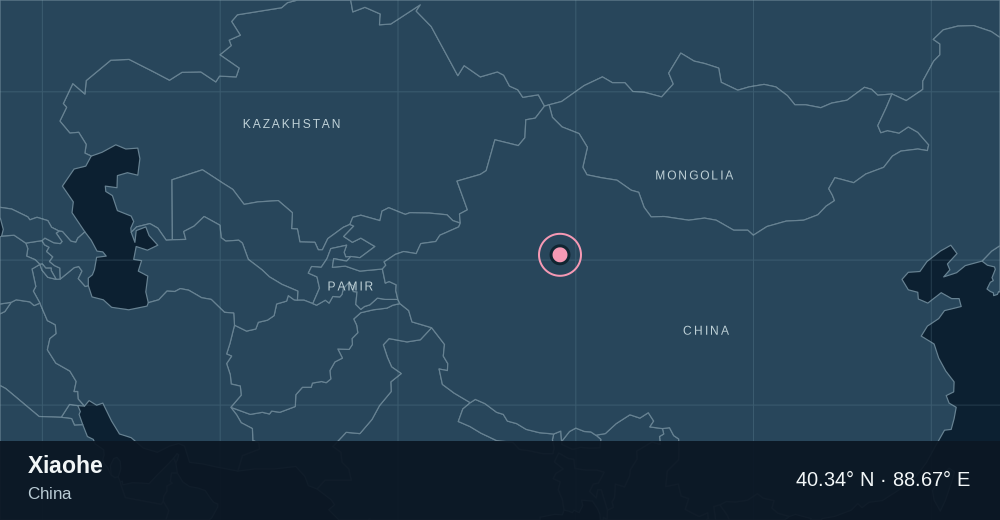
Exceptionally preserved remains in the desert had prompted competing ideas about migrations into Xinjiang. The study compared people from the Tarim and Dzungarian basins; the pin marks Xiaohe.
How they found it
The team analysed ancient genomes and tested dental calculus for preserved milk proteins. One kind of evidence tracks biological ancestry, the other a practice people could learn from neighbours.
What makes it unique
The combination showed that a population could retain a distinctive ancestry while adopting foods and technologies from elsewhere. Clothing and diet alone had been unreliable guides to these individuals’ origins.
Gallery
Where it was found
Xiaohe Cemetery, Tarim Basin
Tags
Related discoveries
 Illustration🏺 Archaeology
Wheat and Millet Meet in a Bronze Age Burial at Begash
Charred wheat and broomcorn millet from Begash show that crops with different geographic origins had reached the same Central Asian foothill community in the third millennium BCE.
Read more → Illustration🧬 Biology
A Child Buried at Mal’ta Links Ice Age Siberia to the Peopling of the Americas
An arm bone from a child buried near Lake Baikal yielded a genome roughly 24,000 years old. It connected an Ice Age Siberian population to part of the ancestry of Indigenous peoples of the Americas.
Read more → Illustration🏺 Archaeology
Charred Grain Traces Early Crop Exchange in the Eastern Altai
Charred cereal remains in Tongtian Cave put wheat and barley in the eastern Altai around 5,200 years ago, earlier than many reconstructions of crop movement through northern Asia.
Read more →